Engineering guide
Air gap, silicone OCR or OCA film?
The appropriate route depends on the real layer stack, geometry, materials, process objectives and service strategy. This comparison is a starting point, not a substitute for feasibility review.
Comparison at a glance
| Approach | Potential advantages | Points to assess |
|---|---|---|
| Air gap | Simple architecture; may support service separation | Internal reflection, condensation risk, parallax and mechanical support |
| Silicone OCR | Compliant liquid layer; adaptable to some stack geometries | Material compatibility, cure, edge control, process handling and rework strategy |
| OCA film | Controlled film thickness and clean lamination route for suitable flat stacks | Flatness, geometry, lamination interfaces, bubble control and component handling |
DECISION FACTORS / INTERACTIVE
Five factors that decide the route.
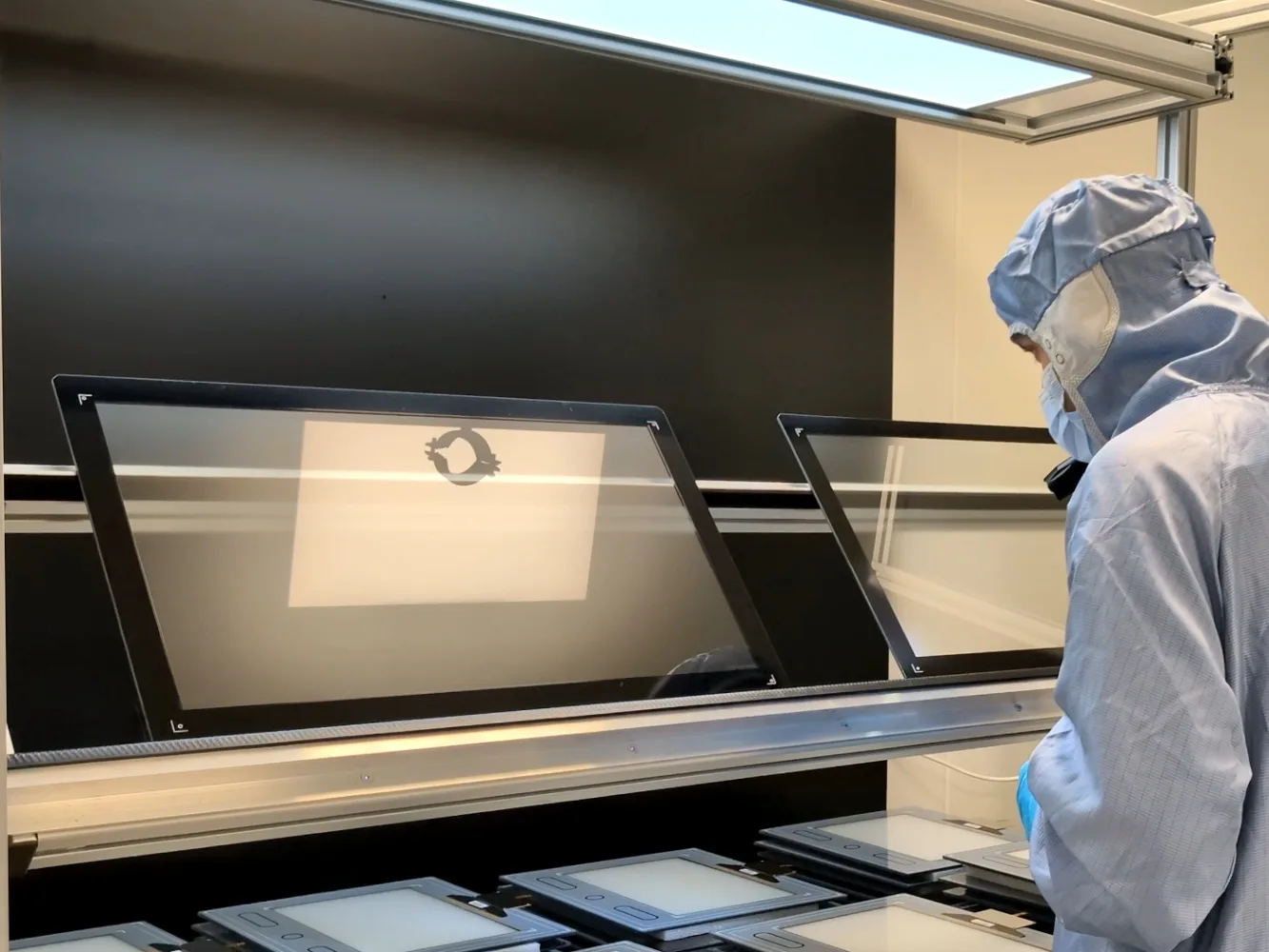 COVER GLASS INSPECTION / BSE
FOCUS / 01
Optical target
Define the ambient light, display luminance, internal surfaces and cover-lens treatment rather than relying on a single "readability" label.
Frequently asked questions
Which bonding method is the cheapest?
Cost depends on volume, geometry and process controls rather than the method alone. A like-for-like comparison needs the actual stack and quantities.
Can the bonding method change mid-project?
It can, but changing method after samples have been approved usually means re-running validation. Earlier reviews leave more room to adjust.
Is air gap still a valid option?
Yes, where cost, serviceability or architecture favour a non-bonded stack. The trade-off is internal reflection, condensation risk and reduced mechanical support.
NEED A RECOMMENDATION?
Share the stack and operating context.
A method review compares your actual layer stack, geometry and service strategy against these three routes.